
Waypoint
OVERVIEW
Waypoint is a men’s mental-health app designed to make emotional support accessible, relatable, and stigma-free. The platform combines daily guided journaling, a supportive community forum where men can openly discuss their challenges, and one-on-one coaching with certified mental-health professionals. Waypoint also offers a curated library of evidence-based resources, helping users understand and navigate their mental-health journeys with confidence. The result is a safe, structured, and empowering space built specifically to help men take meaningful steps toward better well-being. To create a calming and grounded experience, Waypoint incorporates a nature-inspired visual theme, using photography captured in Yosemite and Muir Woods. These natural elements help reinforce the app’s goal of encouraging reflection, clarity, and personal growth.
ROLE AND RESPONSIBILITY
User Research, Project Planning, Interaction and Visual Design, Prototyping, UI development, Photography
This solo project was completed over the course of about two and a half months.
PROBLEM STATEMENT:
Men struggle with anxiety, stress, and emotional isolation, but often avoid seeking help due to stigma, lack of anonymity, and limited accessible support. They need a safe, secure, and relatable way to express themselves, access guidance, and connect with others facing similar challenges.
USER INTERVIEWS
To gather meaningful user insights, I interviewed twelve men between the ages of 21 and 50. These interviews were conducted through a combination of Discord calls, in-person conversations, and typed responses captured in Google Docs. Each session lasted 35 minutes to an hour, giving participants the space to share personal experiences and thoughtful perspectives. This flexible, multi-format approach created a comfortable environment that led to a deeper understanding of men's mental-health challenges and needs.
Could you tell me a bit about yourself and your daily life?
What kind of mental health challenges have you personally experienced?
How do you cope with these challenges?
Think back to the last time you felt stressed, low, or overwhelmed. What happened, and what did you do first?
Do you think there is a stigma behind mental health for men?
How do you feel about the idea of using a mobile app to support your mental health?
Which mobile apps have you used to support your mental health?
If the mobile app could connect you to a community of men facing similar challenges, would you participate? Or would you want to face your challenges alone?
What would it take for you to trust a mental health app with your information?
What does safe and private mean to you? And what would be a deal breaker?
Would you prefer to interact with the app more passively (reading articles, watching videos) or actively (journaling, meditation exercises, self-assessments)
If you were designing an app for men’s mental health, what three features would you implement and why?
USER INTERVIEW INSIGHTS
Men struggle with anxiety, stress, uncertainty, and self-worth—often silently.
Mental health stigma for men is real and widely acknowledged.
Trust, privacy, and anonymity are major concerns.
Community support is appealing— but only if it’s anonymous, relatable, and safe.
Human connection—real or simulated—is highly valued.
Users want structure, accountability, and a sense of progress.
Men often cope through avoidance or distraction—and want tools to replace unhealthy habits.
PROJECT GOAL
Provide accessible, easy-to-use mental-health tools
Deliver simple journaling, prompts, tracking, and coping exercises that don’t overwhelm users.
Facilitate meaningful community connection
Create forums or topic-based groups where men can relate to others facing similar challenges at their own pace.
Incorporate credible guidance and professional support.
Ensure resources come from reliable sources and provide options for coaching or professional help to increase trust.
EMPATHY MAP
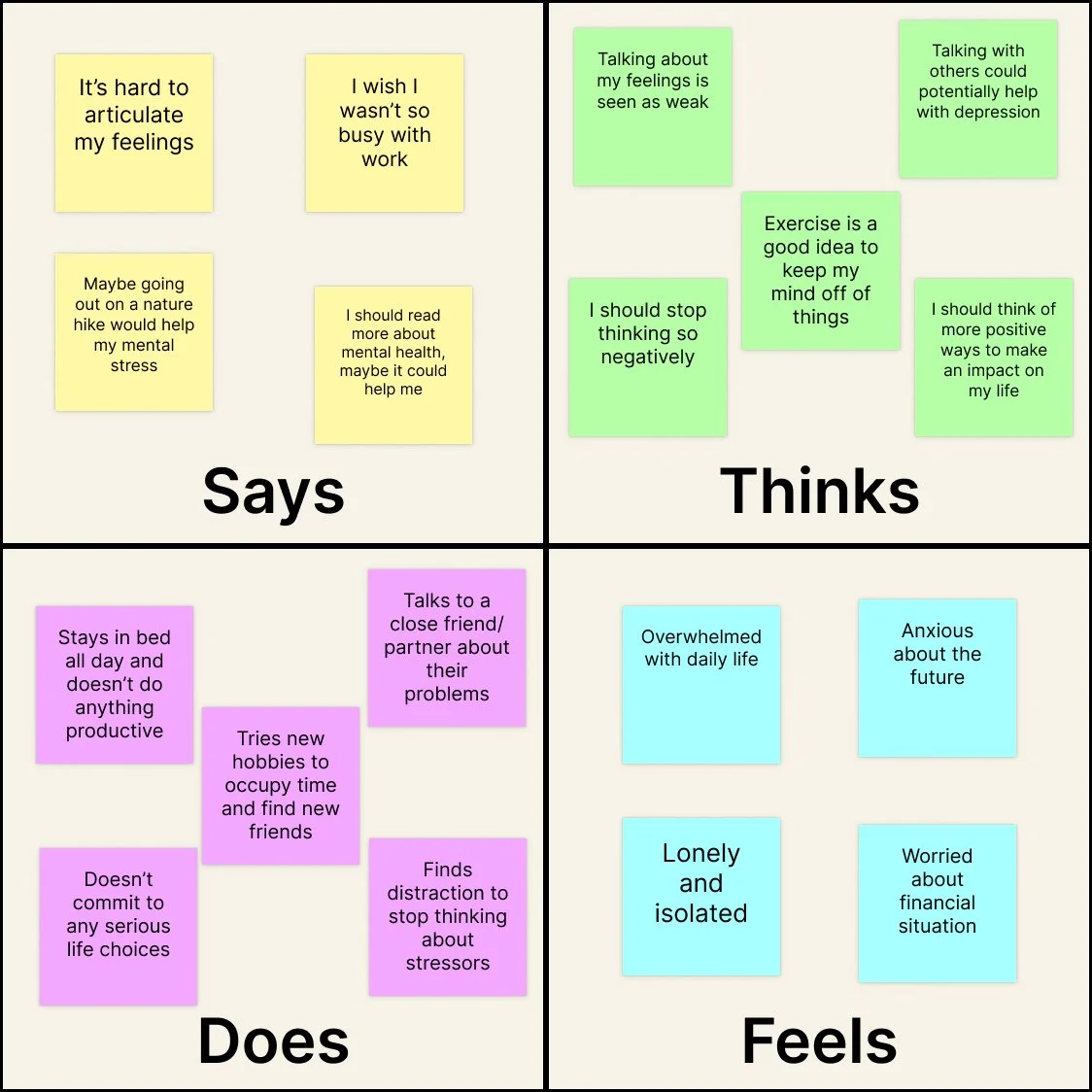
Creating an empathy map helped me visualize the users’ emotions, motivations, and behaviors in a more human-centered way. By organizing what users say, think, do, and feel, I was able to better understand their internal struggles, unspoken needs, and the barriers they face when seeking mental-health support. This process clarified the emotional landscape of the men I interviewed and guided more thoughtful, empathetic design decisions throughout the project.
PERSONA
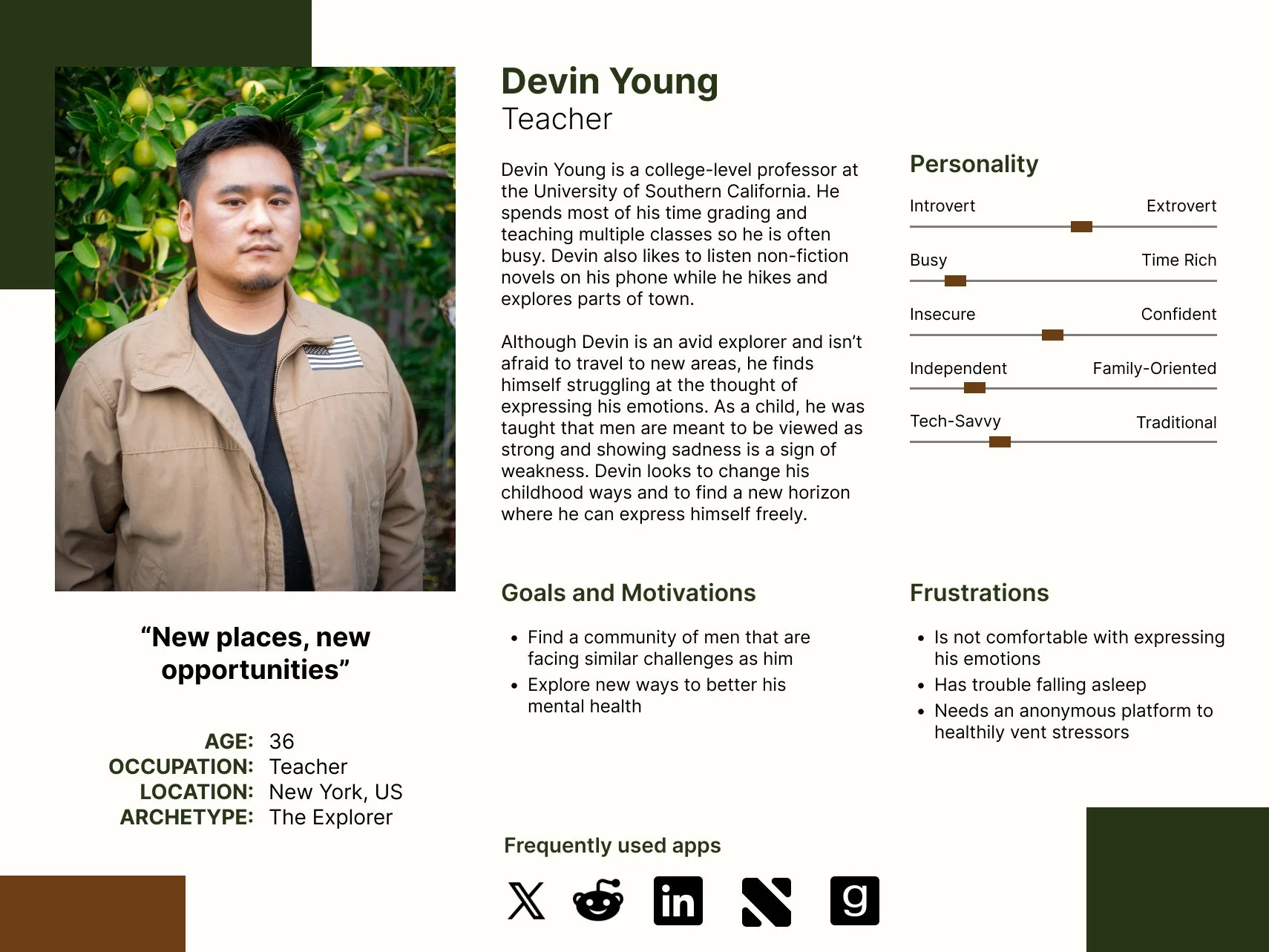
Devin Young is a busy college professor at USC who spends most of his time teaching, grading, and listening to non-fiction audiobooks during his hikes. While he’s adventurous and open to exploring new places, Devin struggles with expressing his emotions due to childhood beliefs that equated vulnerability with weakness. He’s now seeking healthier ways to manage his mental well-being, hoping to connect with other men facing similar challenges and explore methods that help him sleep better, express himself safely, and vent anonymously without judgment.
FUNCTIONAL & NON-FUNCTIONAL REQUIREMENTS
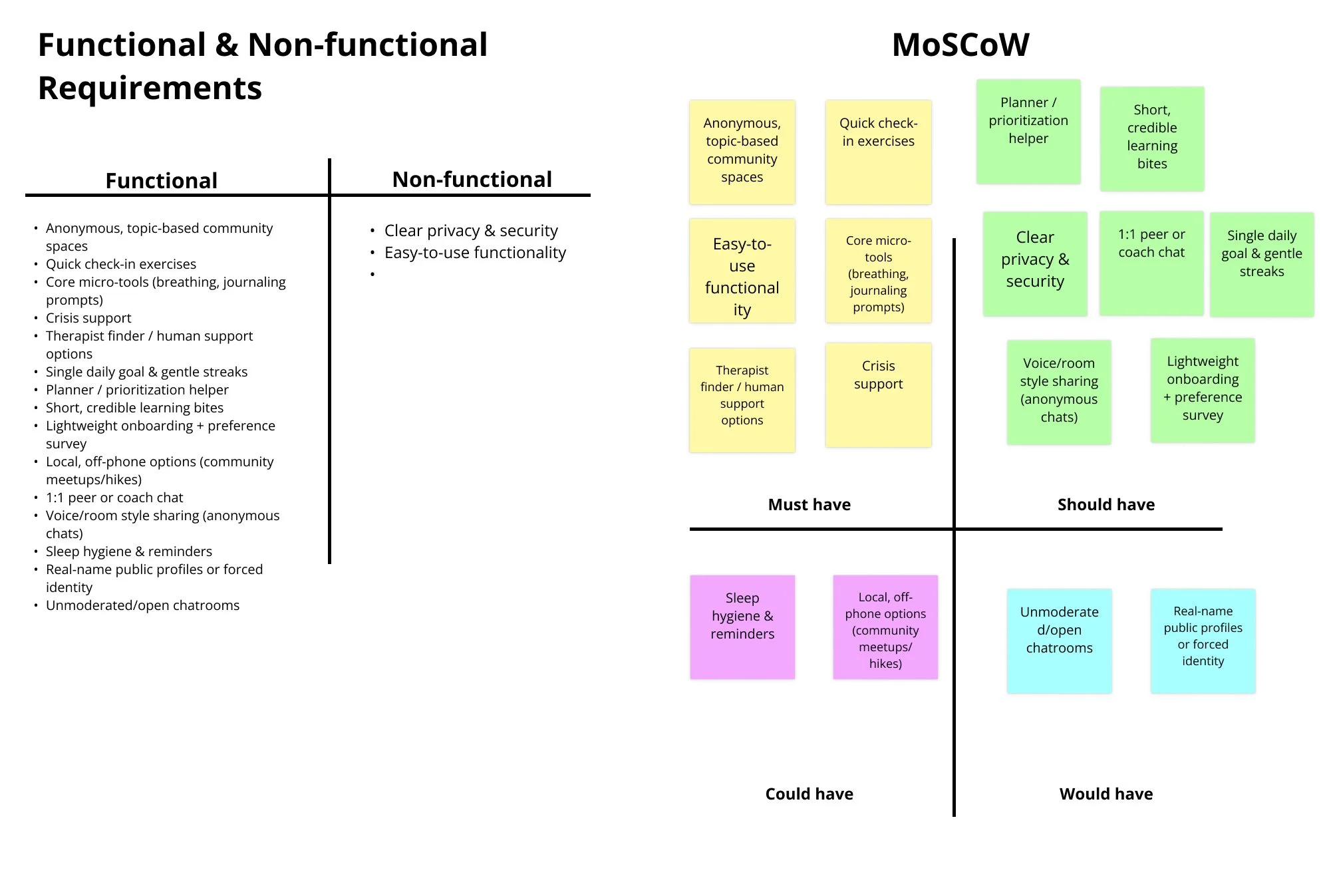
Using non-functional and functional requirements (or the MoSCoW method) was essential for clearly defining what the product must do and how it should perform. This process helped prioritize features, align the design with user needs, and ensure that development stayed focused on delivering the most valuable and feasible parts of the app first.
HIGH-FIDELITY PROTOTYPE
High-Fi Prototype
REFLECTIONS
Working on Waypoint allowed me to deeply explore the challenges men face when seeking mental-health support and to translate those insights into purposeful design decisions. Through my interviews, I learned how strongly stigma, privacy concerns, and emotional discomfort influence men’s willingness to open up. These findings shaped the core features of the app, including anonymous community chat, guided journaling, and curated professional resources, all designed to support users at whichever level of vulnerability they feel comfortable sharing. Integrating reputable sources like Harvard Health and the National Men’s Mental Health organization also reinforced the importance of credibility and trust, two factors repeatedly emphasized by participants.
Developing this app provided me with a clearer understanding of how digital tools can empower individuals to take small yet meaningful steps toward improving their mental well-being. While I focused on crafting a supportive, accessible experience, I recognize that the design process is far from complete. User testing will be essential for validating the app’s effectiveness, uncovering usability challenges, and identifying new opportunities for growth. Moving forward, I’m excited to refine Waypoint based on real user interactions and continue shaping it into a tool that genuinely helps men navigate their mental-health journeys.