
Mabuhi
OVERVIEW
Mabuhi is a mobile app designed for language learners to master Tagalog and English through engaging grammar drills, interactive lessons, and AI-powered pronunciation training. Beyond traditional learning, Mabuhi connects users with native speakers for live chat sessions, creating an authentic and immersive language experience.
ROLE AND RESPONSIBILITY
User Research, Project Planning, Interaction and Visual Design, Prototyping, UI development
This solo project was completed over the course of about three weeks.
PROBLEM STATEMENT:
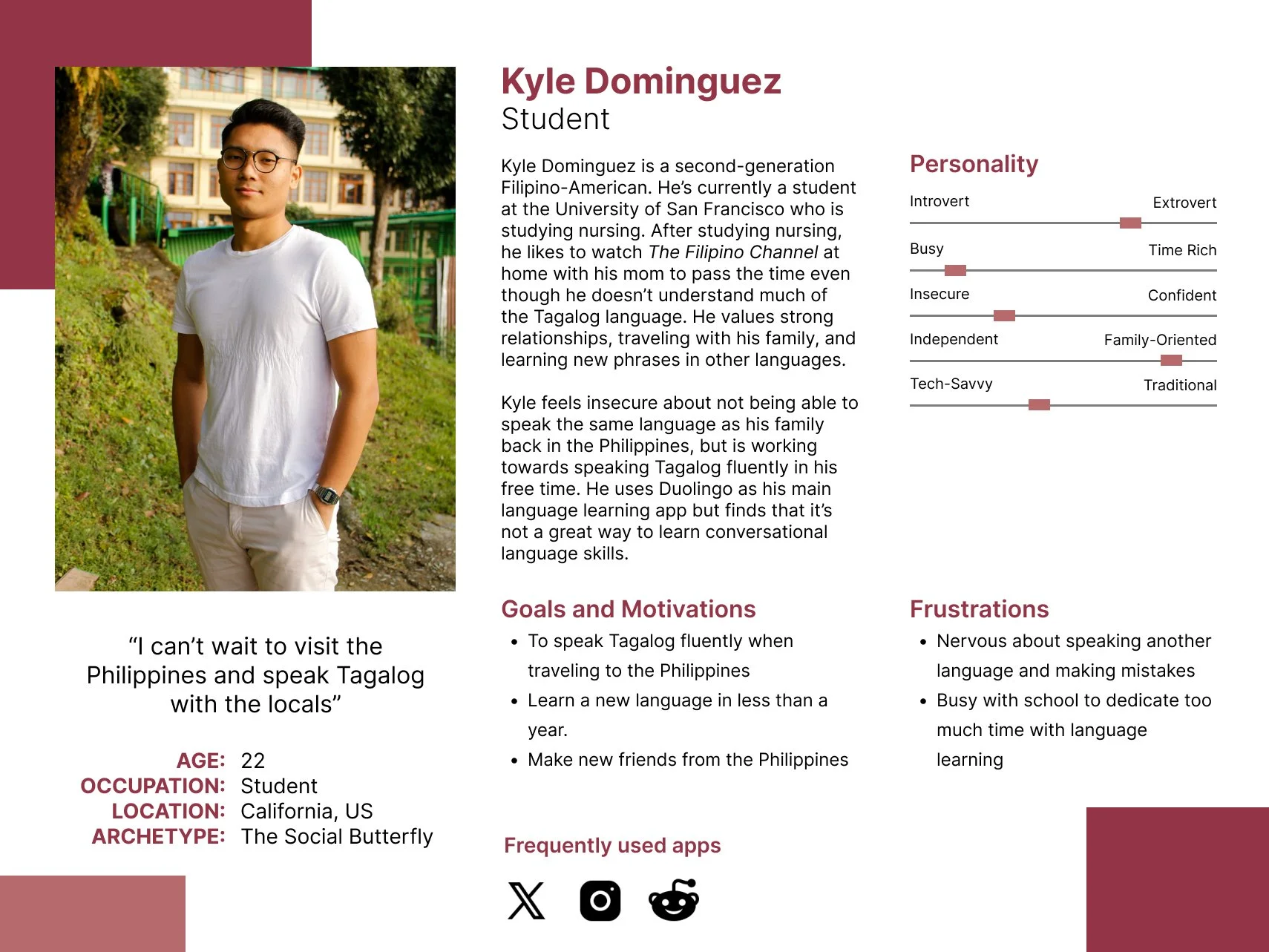
English and Tagalog learners need an immersive and confidence-building language learning app because existing options mainly focus on vocabulary and grammar drills, leaving them unprepared for real-world communication.
USER INTERVIEWS
To gain user insights, I conducted interviews with five individuals who have an interest in language learning or have previously taken language lessons. The participants, aged 21 to 40, were primarily friends or mutual connections. The interviews aimed to understand motivations for learning a new language, preferred learning methods, common challenges, and desired features that users felt were missing from existing language learning applications.
How interested are you in learning a new language, and how do you train your language learning skills?
Via mobile applications, teacher, etc.?
What challenges do you face when trying to practice speaking a new language?
What makes you feel nervous or uncomfortable about speaking in a new language?
Specifically, in which situations do you want to use the language you’re learning the most (with family, social settings, travel, etc)
How important do you think connecting with native speakers you when learning a language?
What kinds of features or activities would make a language learning app fun and engaging?
If you could design your dream language app, what three features would be included?
USER INTERVIEW INSIGHTS
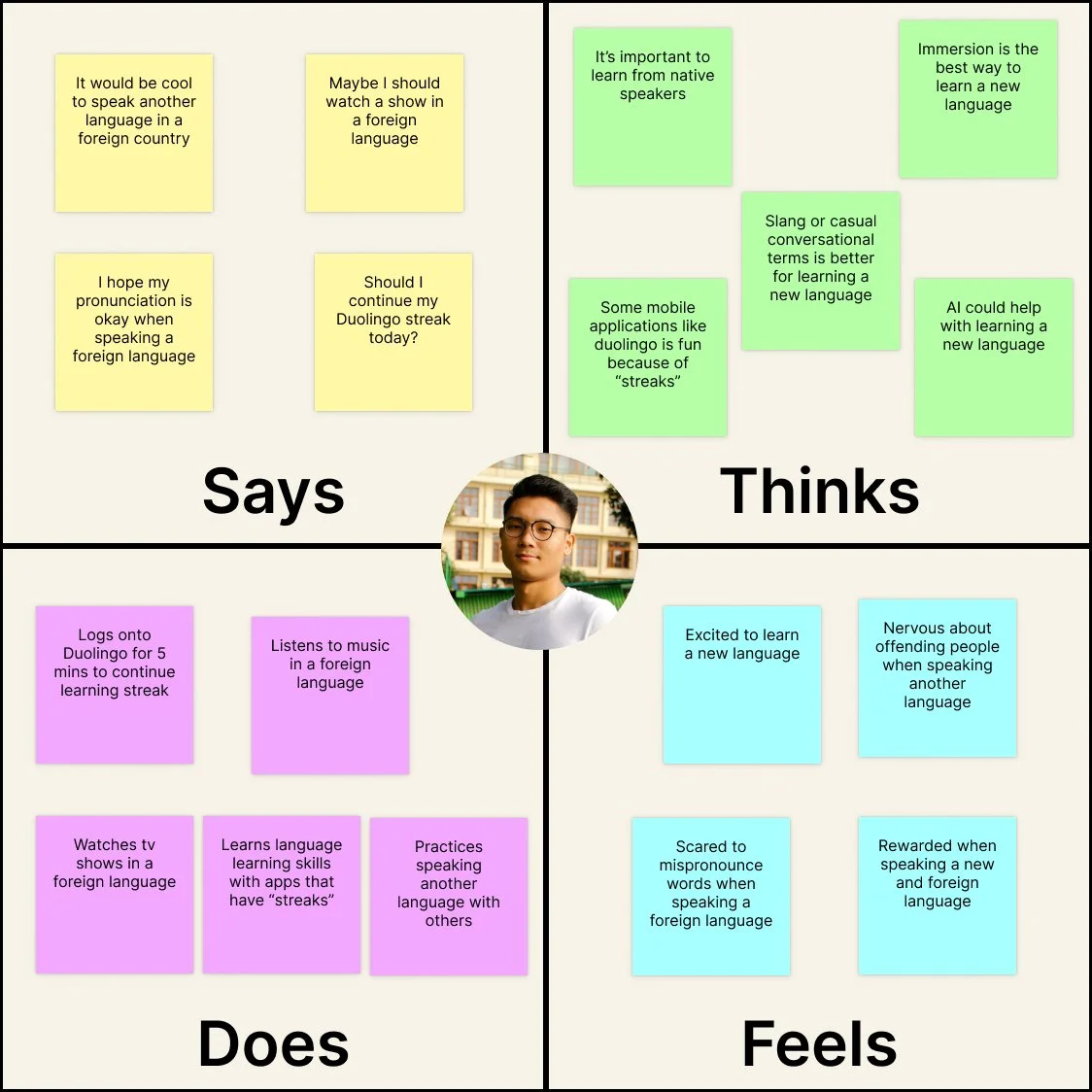
80% of users use Duolingo or similar language-learning apps
Speaking with native-language speakers is important for 100% of users
Users are nervous about making a mistake when speaking another language in front of someone
Daily login streaks are great to keep users consistently using the app
Users mainly want to learn a new language for travel
AI could be a powerful tool to create an environment for users to make mistakes or practice pronunciation
Having multiple methods of language learning is useful
EMPATHY MAP
PERSONA
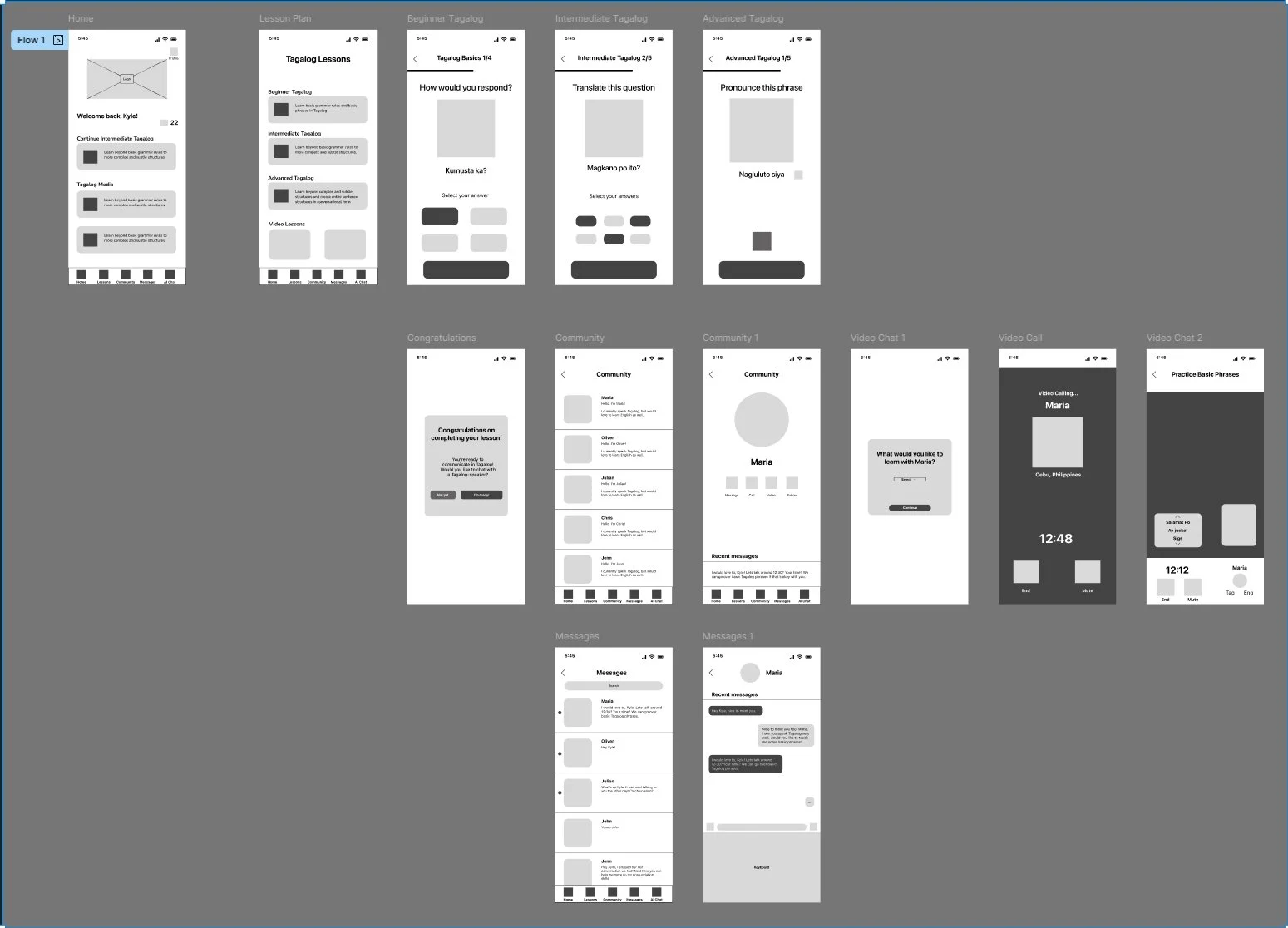
LOW-FIDELITY PROTOTYPE
Mabuhi guides users through a structured and confidence-building language learning journey. The experience begins with interactive exercises focused on a series of sentence structures, pronunciation lessons, and vocabulary expansion. As users progress and demonstrate improved proficiency, the app unlocks a new stage—inviting them to connect with native speakers through live video calls.
From there, users transition into the Community section, where they can chat with fellow learners, exchange language insights, and arrange video sessions to practice speaking in real time. This flow transforms traditional self-study into an interactive, social, and immersive language learning experience.
ISSUES WITH CURRENT FLOW:
There is no current scoring guide to help determine if a user is ready to interact with a native-language speaker comfortably.
Users can feel uncomfortable with video chat, so they might prefer not to interact with native-language speakers
Not every user starts at the same level of language learning; some more advanced users may want to start with video chatting.
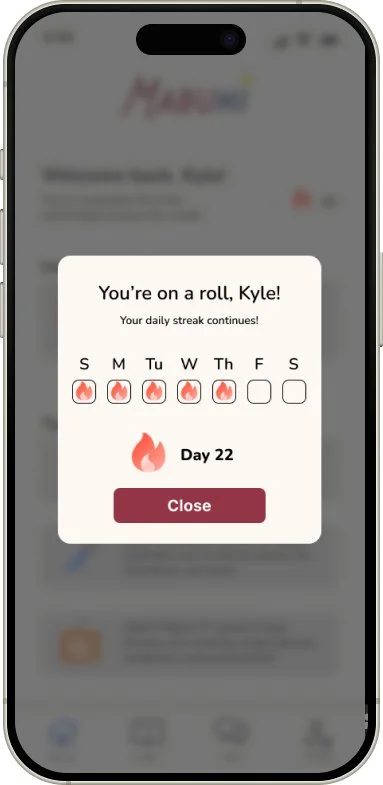
HIGH-FIDELITY MOCKUPS
Daily login streaks to reward and motivate users for consistent daily activity
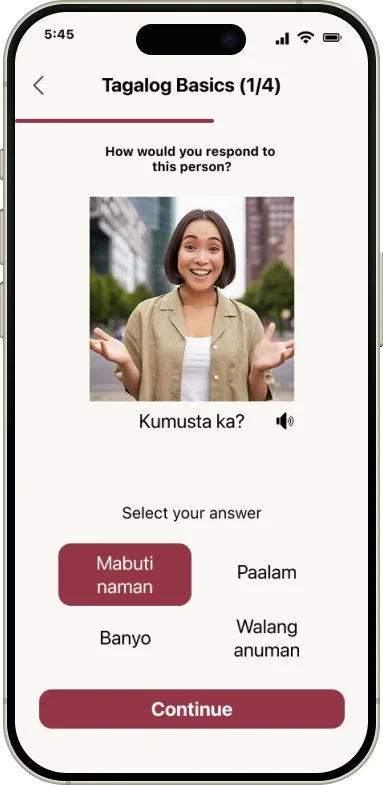
Basic Tagalog lesson to help build confidence in language skills
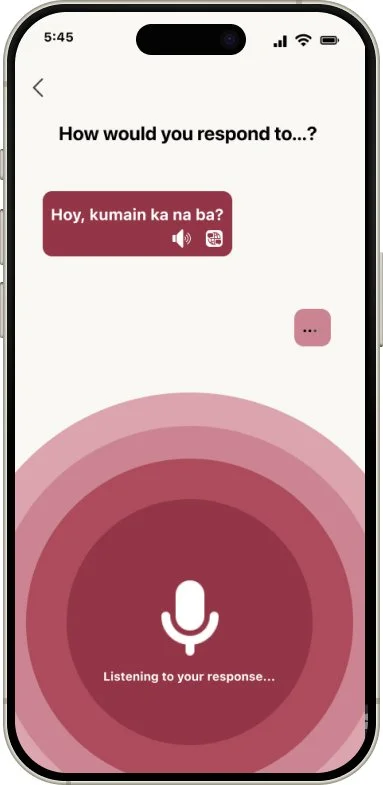
AI chat to help users with pronunciation in a low-risk environment
Live video chat with native language-speaking users to help users further with pronunciation and learning colloquialisms
REFLECTIONS
This project represents the beginning of something meaningful and is one I am deeply proud of. Tagalog is a language my family spoke before migrating from the Philippines to the United States, where much of our cultural identity—including our language—was gradually lost. Mabuhi began as a passion project, driven not only by my desire to explore language learning but also to understand the deeper motivations behind why people choose to learn new languages and immerse themselves in different cultures.
Given the one-month timeline for this project, I was unable to complete the full UX process. I would have liked to develop additional prototypes—particularly fully realized lesson plan flows—to conduct user testing and gather feedback. Identifying and solving user challenges through testing is something I’m deeply interested in, so the limited timeframe was a constraint. I also would have liked to interview a larger pool of participants; while five users provided valuable insights, a broader sample could have revealed more diverse perspectives on language learning habits and preferred app features.
This project served as a great lesson for me. It not only strengthened my skills in UX research and design but also deepened my understanding of how cultural connections and personal motivation shape user experiences. Moving forward, I plan to expand on Mabuhi by refining the user flow, developing more comprehensive prototypes, and conducting broader user testing to create an even more engaging and meaningful language learning experience.
1
2
3

4